Keynotes
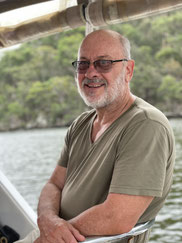
Tim Flannery - AMRI, Sydney: "Evolution of the Monotremes. The World's Oddest Mammals"
Photo: © Tim Flannery
Tim Flannery was 2007 Australian of the Year.
In 2013 he founded, and is chief councilor, of the Australian Climate Council, Australia’s largest and most successful crowdfunded organisation.
Flannery has taught at Harvard University, and has advised governments both in Australia and Canada. In 2007 he established and co-chaired the Copenhagen Climate Council, and in 2011 was appointed Australia’s first Climate Commissioner.
He serves on the board of the Prince Albert II Foundation, has been a board member of WWF International and the Australian Wildlife Conservancy, an advisor to the National Geographic Society, a founding director of the Australian Wildlife Conservancy. He has published around 150 peer-reviewed scientific papers and has named 35 living and 50 fossil mammal species, many of which are from PNG.
His 32 books include The Future Eaters and The Weather Makers, which has been translated into over 20 languages. He has made numerous documentaries and regularly writes for the New York Review of Books.
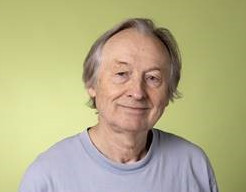
Rainer Hutterer - LIB, Bonn: “A short history of the German Society for Mammalian Biology (DGS), 1926-2026”
Photo: © Rainer Hutterer
Rainer is a former curator of the Museum Koenig Bonn (Leibniz Institute for the Analysis of Biodiversity Change), who authored more than 100 publications focusing on the diversity of mammals,
predominantly small mammals (shrews, rodents, bats) of Africa and elsewhere. Besides his morphologic and taxonomic interest in these groups he is also interested in historical biology and
archaeozoology and in patterns of evolution and extinction of vertebrates and gastropods in the Atlantic Islands and in North Africa.
His membership period in the German Society for Mammalian Biology already covers half a century, wherefore we are very glad to have won him as the laudatory speaker for this DGS anniversary
conference.
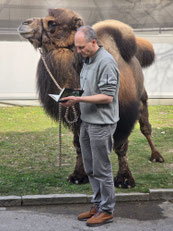
Marcus Clauss - UZH, Zurich: Anthropomorphizing at the zoo: How emotions & traditions and not biology shape animal husbandry”
Photo: © Marcus Clauss
Marcus is Head of Research and Co-Director of the Clinic for Zoo Animals, Exotic Pets and Wildlife at the University of Zurich’s Vetsuisse Faculty in Switzerland, where he also serves as a full professor in comparative digestive physiology, nutrition, and biology of zoo, companion and wildlife species. His expertise spans digestive physiology, nutrition, and the biology and management of a broad range of animal species, with interests that include evolution, animal husbandry, medicine, and the philosophy of science. To learn more about Marcus, click here.
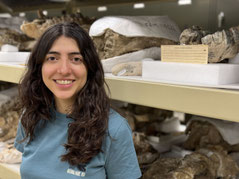
Iris Menendez, MfN, Berlin: “Morphological responses of mammals to a changing environment across deep time”
Photo: © Iris Menendez
Iris is an evolutionary biologist investigating how environmental change shapes mammalian evolution across macroevolutionary timescales. Her research integrates skeletal morphology, diversification dynamics, and ecological specialization using geometric morphometrics and phylogenetic comparative approaches applied to both fossil and extant taxa. By combining morphological and evolutionary perspectives, she aims to understand how mammals respond to shifting environmental regimes through time. You can find more information about Iris here.

Selina Brace , Natural History Museum, London: “Museuomics: Genomic Insights from Museum Collections - From Dogs to Giant Ground Sloths”
Photo: © Selina Brace
Selina is a UKRI Merit Researcher in ancient DNA and museum-based genomics and she is Head of the ancient DNA laboratory at the Natural History Museum, London. Her research uses aDNA at species and population levels to address key questions in mammalian taxonomy and evolutionary relationships. By reconstructing past population histories and structure, she explores how mammals responded to climatic and human-driven change, and uses these insights to assist with modern conservation strategies. You can find more information about Selina here.

Eduardo Eizirik, PUCRS, Porto-Alegre: “Evolutionary and conservation genomics of Neotropical carnivores”
Photo: © Eduardo Eizirik
Eduardo is currently Full Professor at the School of Health and Life Sciences and Chair of the Graduate Program in Ecology, Evolution and Biodiversity at PUCRS in Brazil. His research focuses on evolutionary and conservation genetics, genomics, and molecular ecology, particularly the evolution and conservation of Neotropical carnivores. You can find more information about Eduardo here.